
Alopecia
Restoring Hair Health with
Compassion and Precision
Our dermatology team specializes in identifying the root causes of
hair loss and guiding patients through proven treatment options.
What is alopecia?
Alopecia is hair loss. This troubling issue can affect both men and women and is more common as you age. But, alopecia may occur in anyone. Alopecia has many possible triggers, including genetics, autoimmune disease, physical trauma, and emotional stress. Because there are many different types of alopecia and several possible causes, Thomas Dermatology takes a highly customized approach to hair restoration.
When do I need alopecia treatment?
If you experience certain changes in your hair, it’s important to seek medical care quickly to prevent progression. Some signs that you may need alopecia treatment include:
- Hair looks thin or stringy
- More of your scalp shows
- Thinner ponytail
- Increase in hair in the drains
- Brush fills with hair faster than before
- Increase in hair shedding on your pillow
- Hair feels brittle and weak
In most cases, you notice multiple signs of alopecia at one time. Don’t ignore these symptoms. It’s much easier to restore your hair to a level that you’re happy with if you still have a good amount of healthy hair before starting treatment.
How is alopecia diagnosed?
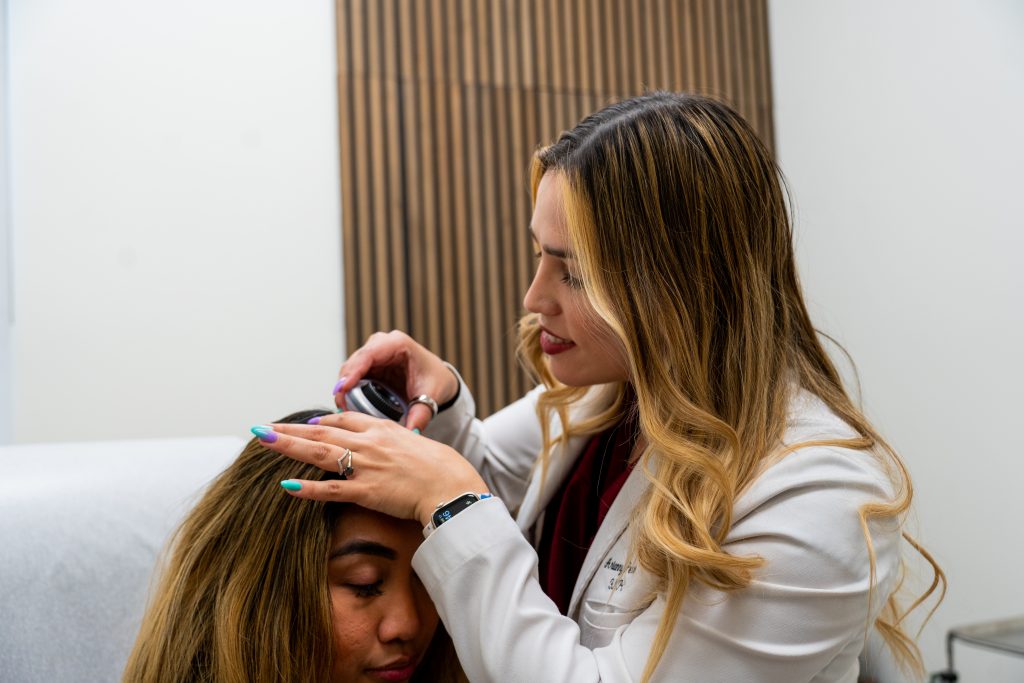
The Thomas Dermatology team starts with a careful exam of your scalp and hair.
They review your symptoms and also take photos to document a starting point before treatment.
Hair loss can have complex causes, so you may need specific lab blood tests to find the cause of your alopecia. Your diagnosis and hair restoration goals can both guide the treatment process.
Frequently Asked Questions
What is alopecia and what triggers hair loss?
Alopecia refers to hair thinning or patchy loss. Potential causes include genetics, autoimmunity, hormonal changes, stress, scalp trauma, certain medications, or traction from hairstyles. Individual patterns and predispositions differ.
How do providers diagnose alopecia?
A dermatologist reviews your history, examines the scalp (often with magnification or dermoscopy), and may order labs (thyroid, hormones, vitamins). Photos help track changes over time. Because hair loss often has multiple contributing factors, diagnosis is comprehensive and tailored.
What treatments are offered?
Treatment depends on underlying cause, hair pattern, and patient characteristics. Options may include topical minoxidil, oral finasteride (when appropriate), PRP injections, intralesional or topical steroids, nutritional support, or hair‑specialist referral. Since individual response varies, results differ and plans are personalized.