
Facial Redness, Rosacea, Telangiectasias, Broken Capillaries
Calm Redness and Restore
Even-Toned Skin
We treat facial vessels and redness using advanced laser and light
therapies tailored to your skin.
Cosmetic Concierge: (702) 505-4327
Facial redness, rosacea, telangiectasia, and broken capillaries are common skin concerns that can cause persistent redness, visible blood vessels, and skin sensitivity. At Thomas Dermatology, we offer VBeam laser treatments to safely and effectively target these concerns, helping patients achieve clearer, more even-toned skin.
What is the VBeam Laser?
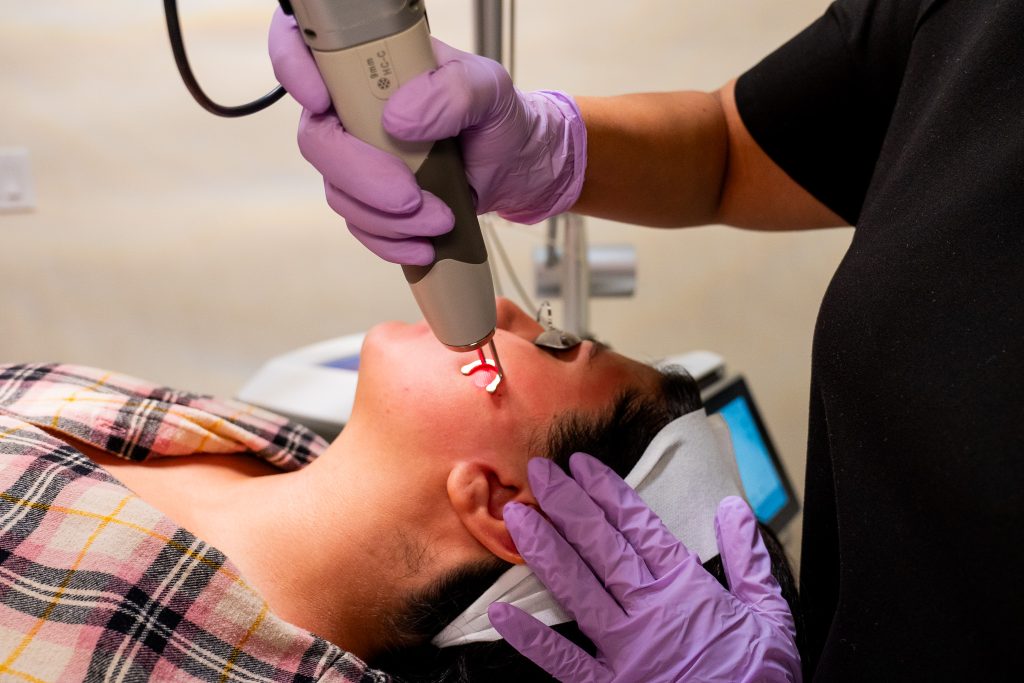
The VBeam laser is a pulsed dye laser (595nm) designed specifically to treat vascular skin conditions by targeting blood vessels beneath the skin’s surface. The laser emits a gentle burst of light that is absorbed by red blood cells, causing the targeted vessels to collapse and gradually fade from view. VBeam is known for its precision, effectiveness, and minimal discomfort, making it a preferred treatment for facial redness and vascular lesions.
Conditions Treated with VBeam
Vbeam is the ideal treatment for any vascular lesions or skin concerns. Here are some skin conditions commonly treated with Vbeam:
· Rosacea: Redness and visible blood vessels, often on the face.
· Port-wine stains: Birthmarks made up of dilated blood vessels that appear reddish-purple.
· Facial redness: General redness or flushing of the skin, sometimes caused by sun exposure or skin irritation.
· Sun damage: Broken capillaries and other discolorations caused by sun exposure.
· Cherry angiomas: Benign growths of blood vessels, often red or purple in color.
· Hemangiomas: Benign tumors of blood vessels, usually present from birth.
· Acne scars: Particularly those with redness or pigmentation issues.
· Stretch marks (striae): Red or purple stretch marks can benefit from Vbeam for skin rejuvenation.
· Telangiectasia (Spider veins): Small dilated blood vessels on the skin.
· Poikiloderma of Civatte: Skin condition characterized by redness, pigmentation, and thinning of the skin, often from sun damage.
Benefits of VBeam Laser Treatment
· Improves overall skin tone by reducing redness and visible blood vessels
· Non-invasive treatment with minimal discomfort and no downtime
· Safe and effective for a variety of skin types and tones
· Can provide long-lasting results with a series of treatments
· Stimulates collagen production, contributing to healthier skin over time
What to Expect During Treatment
A typical VBeam laser session lasts between 15 to 30 minutes, depending on the area being treated. Most patients describe the sensation as a mild warming or tingling feeling, similar to a rubber band snap. A built-in cooling system ensures comfort throughout the procedure. Mild redness or swelling may occur after treatment, but this usually subsides within a few hours to a couple of days.
How Many Treatments Are Needed?
The number of sessions needed varies depending on the severity of redness or visible vessels. Many patients see noticeable improvement after 1 treatment, while others may require 2 to 3 sessions for optimal results. Treatments are typically spaced four to 4 weeks apart.
Schedule Your Consultation
If you are struggling with facial redness, rosacea, telangiectasia, or broken capillaries, VBeam laser treatment at Thomas Dermatology may be the solution for you. Our team will create a personalized treatment plan to help you achieve clearer, healthier-looking skin.
Call us at (702) 505-4327 or schedule a Cosmetic Consultation online!
Frequently Asked Questions
What conditions cause facial redness?
How does VBeam® laser treat redness?
VBeam® emits light wavelengths absorbed by hemoglobin, selectively collapsing superficial vessels while sparing surrounding skin. Because vessel depth and skin characteristics differ, results vary between patients.
What should I expect?
Treatments typically last 15–30 minutes. You may see vessel blanching or fading, and possibly mild swelling or bruising. Multiple sessions are often needed. Your provider will give specific post‑treatment instructions. Because healing and vascular response differ, outcomes vary per individual.