
Moles
Expert Monitoring and Removal
of Moles
Our dermatologists evaluate and treat moles with precision, ensuring both
medical safety and cosmetic sensitivity.
What are moles?
Moles are benign skin growths that occur when your pigment-producing cells — melanocytes — grow in clusters. Moles are common and generally appear during the first three decades of life. These skin growths may appear anywhere on the body, including areas of your skin not exposed to the sun. Though moles vary in size, shape, and color, most are round and have a uniform color throughout. They may be flat or raised and generally stay the same over time.
What are suspicious-looking moles?
Most moles are benign. However, when you develop new moles, or your mole changes shape or color, then you might have a suspicious mole.
Suspicious moles may be signs of melanoma, which is a fast-growing and potentially deadly type of skin cancer. When evaluating your suspicious-looking moles, the Thomas Dermatology team uses the ABCDE guide.
ABCDE stands for:
- A — asymmetrical shape
- B — irregular border
- C ― uneven coloring throughout
- D — diameter that’s larger than a pencil eraser
- E — evolving or a mole that changes over time
If you have a suspicious mole that has any of these features, schedule a skin examination at Thomas Dermatology right away.
What can I expect during an evaluation for moles?
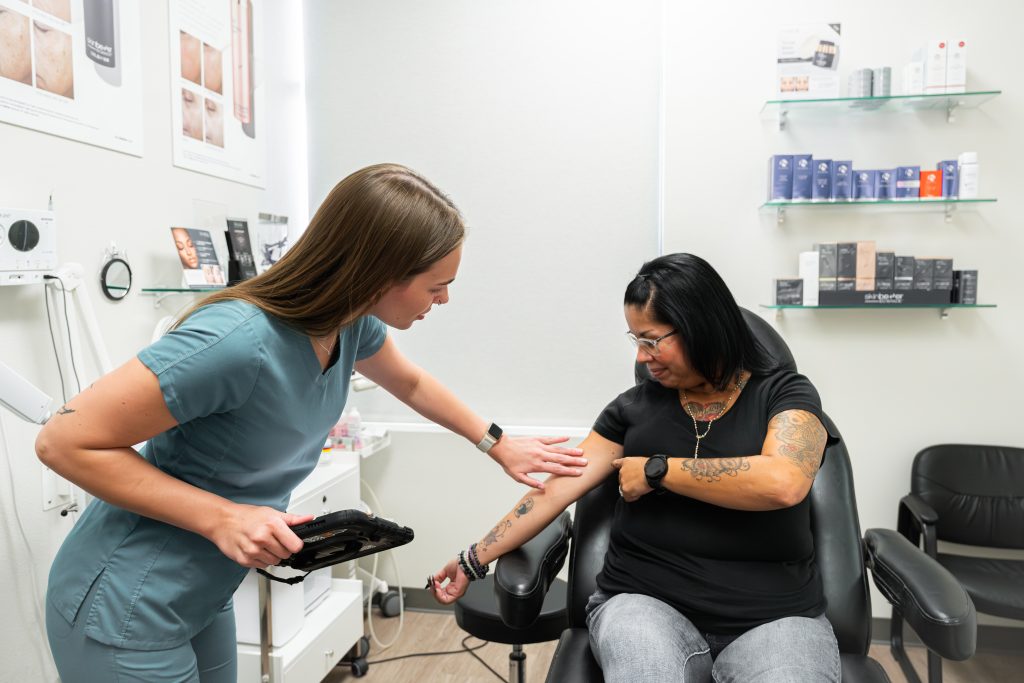
When you visit Thomas Dermatology for an evaluation of your moles, you can expect a comprehensive and detailed exam. During your visit, your provider closely examines your skin from head to toe. They take detailed notes of your skin and moles, looking for skin growths that may be of concern. Your provider also teaches you how to perform a self-skin exam at home and the measures you can take to protect your skin to reduce your risk of developing skin cancer.
Frequently Asked Questions
When is a mole considered suspicious?
While most moles are benign, concerning signs include changes in color, border irregularity, asymmetry, size, or evolution (the “ABCDEs”). New itching, bleeding, or pain also warrant evaluation. Because risk factors vary, any changing lesion should be assessed by a dermatologist.
How are moles evaluated?
Dermatologists conduct a full skin exam (often with dermoscopy) and may take photographs for monitoring. If a lesion appears atypical, biopsy is performed. Monitoring over time is common because subtle changes may be significant.
What happens if a mole needs removal?
Noncancerous lesions can be shaved or excised under local anesthesia with minimal scarring. If pathology reveals cancer (e.g. melanoma), further excision or additional therapy may be required, with ongoing surveillance. Outcomes depend on lesion type, depth, patient health, and healing—so results differ.