
Skin Cancer
Early Detection. Expert Treatment.
Peace of Mind.
Our board-certified providers lead the way in skin cancer screening, diagnosis,
and surgical treatment.
What are the types of skin cancer?
There are many types of skin cancer. The most common types of skin cancer include:
Basal cell carcinoma (BCC)
BCC is the most common type of skin cancer. BCC lesions may appear as skin-colored growths or a pearly bump. They most often appear on the head, neck, and arms.
Squamous cell carcinoma (SCC)
SCC is the second most common type of skin cancer. SCC may appear as red bumps, scaly patches of skin, or an open sore.
This type of cancer may occur on the ears, face, neck, arms, chest, or back.
Melanoma
Melanoma is less common than BCC or SCC but is the most serious type of skin cancer. This type of skin cancer develops from the pigment-producing cells in your skin — melanocytes.
Melanoma may change the appearance of an old mole or appear as a new mole. If you have any moles of concern, schedule an appointment with the skin cancer experts at Thomas Dermatology right away.
Melanoma grows quickly and may spread to other organs. Early diagnosis and treatment increase your chances of a full recovery.
For more information about melanoma, please visit the American Melanoma Institute, a nonprofit dedicated to melanoma and skin cancer education and prevention, offering a wealth of helpful information.
What is actinic keratosis?
Actinic keratosis is a dry, rough, scaly skin growth. In a small percentage of people, actinic keratosis turns into skin cancer. These skin growths may go away on their own. The team at Thomas Dermatology evaluates, diagnoses, and treats actinic keratosis to reduce your risk of developing skin cancer.
How is skin cancer diagnosed?
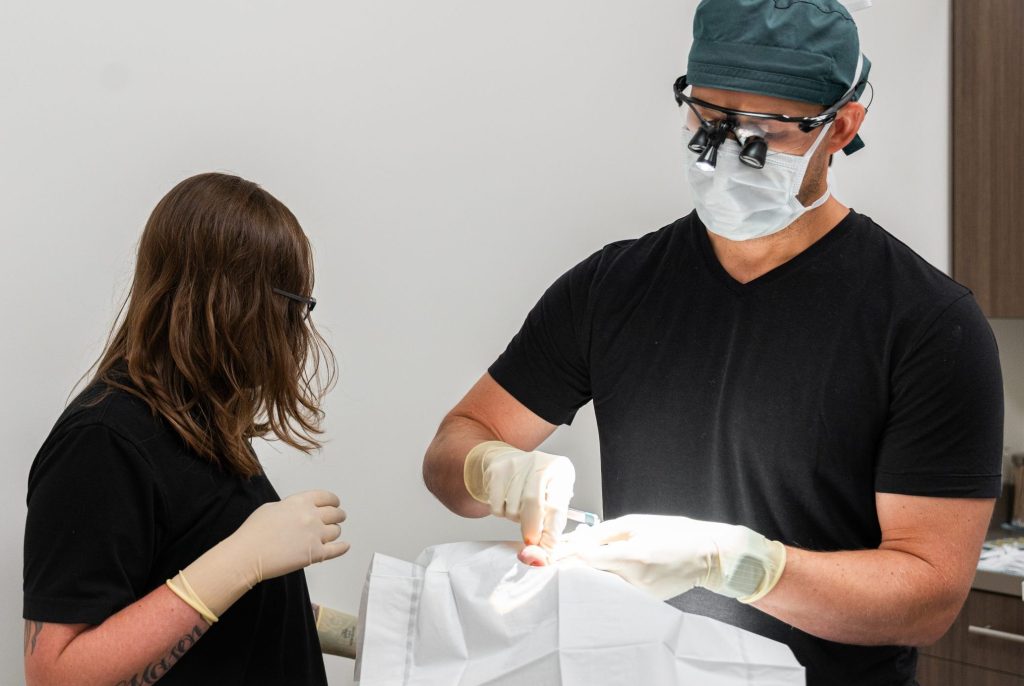
When you visit Thomas Dermatology with concerns about a skin growth or mole, the team conducts a comprehensive skin exam.
If they have any concerns about a specific skin growth, they take a biopsy. Thomas Dermatology has an on-site pathology lab where they evaluate the skin biopsy to determine the right diagnosis.
Frequently Asked Questions
What types of skin cancer do you treat?
We treat basal cell carcinoma, squamous cell carcinoma, melanoma, and precancerous lesions like actinic keratoses. Each type requires a tailored treatment approach based on risk, location, and patient health.
How is skin cancer diagnosed?
Dermatologists perform full-body skin exams, typically using dermoscopy to scrutinize lesions. Suspicious spots are biopsied, and in-house pathology allows faster results. Long-term monitoring is often part of care, since lesions evolve differently across patients.